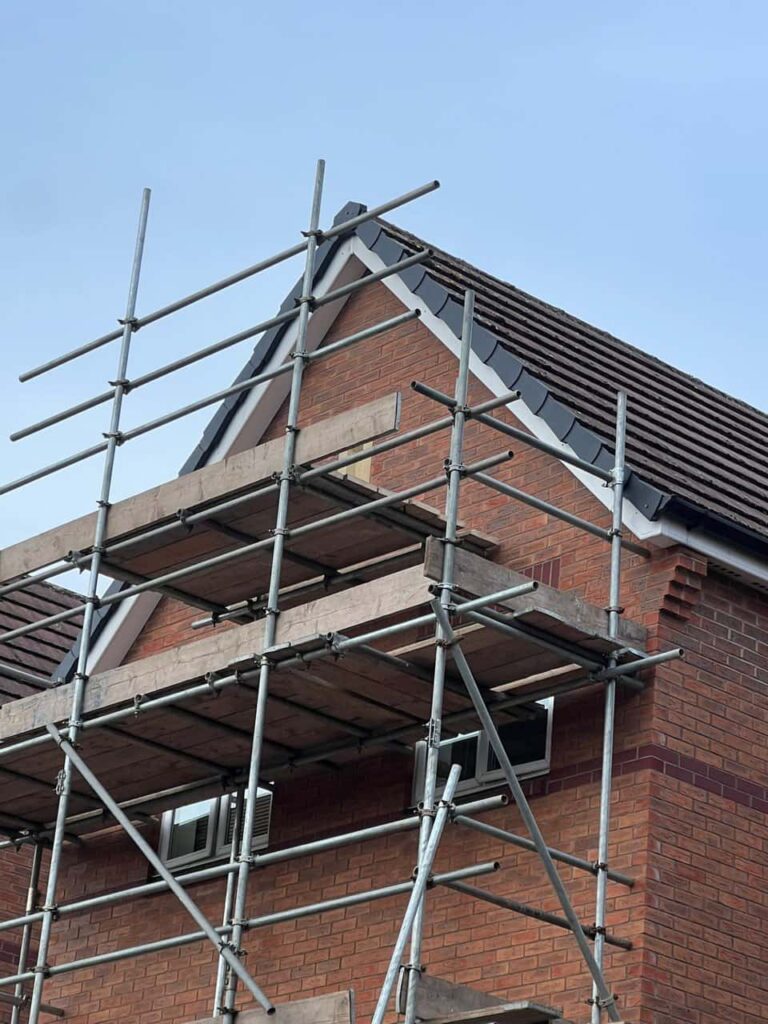
Roof damage can range from a single displaced tile to serious structural movement. Although it may be tempting to climb a ladder and inspect the problem closely, a damaged roof can be unstable, slippery or surrounded by loose materials. Approaching it without the correct equipment and experience may place you at unnecessary risk.
Property owners in Haverhill, Suffolk, should inspect suspected damage from a safe position at ground level and arrange a professional assessment when there are signs that the roof may no longer be secure.
Signs That a Damaged Roof May Be Unsafe
Some roofing defects present a greater immediate risk than others. If any of the following warning signs are visible, avoid approaching the roof or standing beneath the affected area.
A Sagging or Distorted Roofline
A dip, curve or bulge in the roofline may indicate weakened battens, damaged decking or problems with the supporting structure. Sagging can also develop when water has repeatedly entered the roof and affected the materials beneath its covering.
The extent of this damage cannot always be judged from outside. Avoid entering the loft beneath a visibly sagging section until the roof has been professionally assessed.
Loose or Hanging Roofing Materials
Displaced tiles, loose ridge sections and hanging guttering can fall without warning. Strong winds may lift already weakened materials further, while movement elsewhere on the roof can disturb pieces that appear secure.
Keep people, vehicles and garden furniture away from the area below. Fallen materials should not be retrieved while further debris remains overhead.
Damage Following Strong Winds
A roof may be particularly unsafe during or immediately after severe weather. Gusts can loosen tiles, damage fixings and disturb mortar around ridges, verges and chimney details.
Do not attempt to climb onto a roof while strong winds or heavy rain continue. Weather conditions must be considered when planning work at height because they can significantly increase the risk of a fall.
Holes or Partially Collapsed Sections
An opening in the roof covering may expose damaged underlay, battens or decking. The surrounding surface may look intact while lacking adequate support underneath.
Any area affected by partial collapse should be treated as unstable. Remain outside the affected room where practical, keep the area below clear and request urgent professional assistance.
Fire or Significant Water Damage
Fire can weaken timber and fixings even where the roof still appears to retain its shape. Prolonged water ingress can also cause timber decking, battens and structural members to decay.
A ceiling that is bulging, cracking or holding water is another warning sign. Do not stand beneath it or attempt to release the trapped water yourself, as part of the ceiling could fall.
Fragile or Unfamiliar Roof Coverings
Sheeted roofs, rooflights and deteriorated flat-roof materials may not support a person’s weight. Tiles and slates can also conceal weakened components beneath them. Official guidance advises treating roofs as fragile until a competent person has confirmed otherwise.
Even a roof that looks solid from ground level should not be used as a walking surface without an appropriate assessment and safe access arrangements.
Wet, Icy or Moss-Covered Surfaces
Rain, frost, moss and algae can make roofing materials extremely slippery. Cracked tiles may also move under pressure, while wet felt and metal surfaces can provide very little grip.
A household ladder does not make these conditions safe. Roofing work may require secured access equipment, edge protection and other measures selected for the roof and the task.
Why a Ground-Level Check Is Safer
You can often identify useful warning signs without approaching the roof. From a safe position, look for:
- Missing, slipped or uneven tiles
- Gaps along ridges and verges
- Leaning chimney components
- Torn or displaced flashing
- Sagging gutters or fascia boards
- Debris on the ground
- Changes in the roofline
- Internal damp patches or daylight in the loft
Binoculars or a camera with a zoom function may help, but avoid leaning from windows or accessing elevated areas to obtain a better view.
How a Professional Roofer Approaches the Problem
A professional roofer will consider the roof’s condition, construction, access points and surrounding hazards before approaching the damaged area. The inspection can then identify whether the problem is limited to the covering or extends to the underlay, battens, decking or supporting structure.
Once the source and extent of the damage are understood, suitable work may include securing loose materials, providing temporary weather protection or completing a targeted repair. This controlled approach helps prevent unnecessary disturbance to unaffected parts of the roof.
Conclusion
A damaged roof is unsafe to approach when there are signs of structural movement, loose materials, partial collapse, fragile surfaces or hazardous weather conditions. Even relatively minor-looking defects can conceal weakened components, so climbing onto the roof to investigate is rarely a sensible first step.
If you have noticed roof damage at a property in Haverhill, Suffolk, contact Haverhill Roofing Repairs to arrange a professional assessment. Our team can examine the problem safely and recommend an appropriate repair without overselling unnecessary work.
Call us on: 01440 840 497
Click here to find out more about Haverhill Roofing Repairs
Click here to complete our contact form and see how we can help with your roofing needs.